

ENFJ (Protagonist): Jungian cognitive functions and 16-type personality profile.
16-Type Personality Profile
Protagonists are known for their enthusiasm, leadership, and care for others. Making up about 2-5% of the population, they are typically charismatic and passionate leaders skilled at inspiring and supporting others. Protagonists possess natural social abilities, able to uplift and motivate those around them. They are passionate about building positive influence and promoting social change.
Characteristics
Social and Charismatic: Protagonists naturally radiate charisma in social interactions. They can effortlessly attract others' attention and build positive relationships.
Inspiring Others: People of this type excel at inspiring and unlocking others' potential. They can often identify others' strengths and potential, helping them develop and grow.
Strengths
Empathy and Understanding: Protagonists possess an exceptionally high degree of empathy, able to deeply understand others' feelings and needs, thereby building strong interpersonal relationships.
Organization and Leadership: Protagonists excel in organization and leadership, able to effectively coordinate teams and projects, driving the achievement of common goals.
Blind Spots
Overly Idealistic: Protagonists can sometimes be overly idealistic, holding unrealistic expectations of people or situations, which may sometimes lead to disappointment or frustration.
Overcommitting: Due to their deep investment in relationships and goals, Protagonists may take on too much responsibility, sometimes leading to emotional exhaustion or neglecting their own needs.
Love
Deeply Affectionate and Loyal Partners: In romantic relationships, Protagonists seek deep emotional connections and understanding. They are loyal and passionate, willing to invest significant energy and care into the relationship.
Seeking Resonance and Support: Protagonists hope their partners can understand and support their values and dreams. They seek mutual support and growth in relationships.
Friendship
Inspiring Friends: As friends, Protagonists are inspiring and full of enthusiasm. They often motivate friends to pursue their goals and provide support and encouragement.
Loyal and Inclusive: Protagonists value friendship and show deep loyalty and inclusiveness toward their friends. They are willing to listen to friends' problems and offer sincere advice and help.
Career Tendencies
Suitable Career Types: Protagonists are typically well-suited for careers that require strong interpersonal skills, organization, and leadership abilities.
Typical Suitable Careers: Teacher, psychologist, social worker, human resources manager, public relations specialist, trainer, public speaker. In these careers, they can fully leverage their interpersonal and influential strengths.
Representative Figures
Based on community vote data

Goethe (1749-1832) was a German literary giant and a major representative of the late European Enlightenment. His magnum opus, the poetic drama 'Faust,' explores the meaning of life and human nature through Dr. Faust's journey of seeking. He was not only a poet and novelist but also conducted scientific research in color theory and botany. His thought is profound and broad, and his works combine classical beauty with philosophical depth, profoundly influencing literature and thought for generations.

Martin Luther King Jr. (1929-1968) was an American Baptist minister and renowned civil rights leader. Deeply influenced by Gandhi, he advocated nonviolent resistance, dedicating his life to fighting for equal rights for African Americans. In 1963, he delivered his immortal 'I Have a Dream' speech at the Lincoln Memorial in Washington. He received the Nobel Peace Prize in 1964. Assassinated in Memphis in 1968, his spirit and vision continue to profoundly influence people worldwide who pursue equality and justice.

Liu Bei (161-223), courtesy name Xuande, was the founding emperor of Shu Han during the Three Kingdoms period. A descendant of the Han imperial family, he rose from humble origins as a straw sandal weaver. Known for his benevolence, he persevered through numerous defeats. His 'three visits to the thatched cottage' to recruit Zhuge Liang became a famous story of seeking talent. He allied with Sun Quan to defeat Cao Cao at the Battle of Red Cliffs, establishing the Shu Han kingdom.
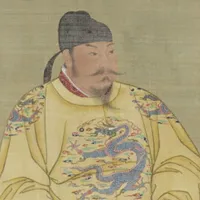
Li Shimin (598-649), Emperor Taizong of the Tang dynasty, was the second emperor and an outstanding statesman and military strategist. During his reign, known as the 'Zhenguan era,' he created the famous 'Reign of Zhenguan' -- one of the most celebrated periods of good governance in Chinese history. He was skilled at accepting remonstrance, employed the talented, and his era saw a powerful, prosperous empire. He was honored by neighboring peoples as the 'Heavenly Khan.'
Jungian Cognitive Functions
ENFJ's function order is Fe → Ni → Se → Ti: Dominant Function Fe, Auxiliary Function Ni, Tertiary Function Se, Inferior Function Ti; the shadow functions are Fi, Ne, Si, Te.
Jungian Functions · Positive
Extraverted Feeling (Fe) occupies the dominant function position for ENFJ.
The Dominant Function is the most core psychological trait of an individual, naturally developing from childhood and becoming the most proficient and trusted function in adulthood, being prioritized in most situations and greatly influencing one's cognitive style, decision-making approach, and behavioral patterns.
This function is the core of one's inner world, representing the most confident and proud part of oneself. It plays a decisive role in the individual's conscious orientation and source of strength, and is key to self-identity and potential realization.
The advantage of the Dominant Function lies in its naturalness and efficiency, as it is the function the individual is most accustomed to and can use with the least effort, providing strong internal motivation and clear decision-making direction. It helps the individual maintain confidence and decisiveness when facing challenges, and is an important source of achievement and energy recovery. However, the Dominant Function also has potential drawbacks. Due to its power and naturalness, the individual may become overly dependent on this function, neglecting the development and use of other psychological functions. This over-reliance can sometimes lead to incompetence or maladjustment when facing problems that require other functions. Additionally, overuse of the Dominant Function may make the individual stubborn and narrow-minded, unable to accept and understand perspectives and methods inconsistent with their dominant function.
The individual typically manifests as very attentive to and valuing others' emotions and needs, socially adept, and able to understand and coordinate interpersonal relationships well. They tend to seek harmony, avoid conflict, enjoy teamwork, and can influence and motivate others through emotional resonance. Strengths include high empathy, excellent communication skills, the ability to build and maintain good relationships, and playing a positive role in teams. Weaknesses may include over-adapting to others while neglecting one's own needs, sometimes avoiding expressing true opinions for the sake of harmony, and feeling uncomfortable or having difficulty handling conflict.
Introverted Intuition (Ni) occupies the auxiliary function position for ENFJ.
The Auxiliary Function is the supporting function that assists the Dominant Function, working in coordination with it. When the Dominant Function is extraverted, the Auxiliary Function is introverted, and vice versa. The Auxiliary Function operates when the individual interacts with the outside world, helping them adapt and communicate in social environments. Unlike the Dominant Function, it is not innate but usually requires corresponding social environments to activate, giving it the strongest social attributes.
The development of the Auxiliary Function contributes to the individual's sense of responsibility and reliability in society, being the part that others consider most reliable. When the Auxiliary Function is well-developed, it helps the individual develop a positive self-identity regarding their own responsibility and reliability. Among the conscious functions, the Auxiliary Function, together with the Dominant Function, are the most commonly used and most visible functions, working together to help the individual gather and organize information, with the Dominant Function taking the lead and the Auxiliary Function providing support.
The individual typically exhibits the following characteristics: they can deeply think about and understand complex concepts, but this ability usually serves as a supplement to their primary function (typically an extraverted function). They may use introverted intuition to predict possible outcomes when facing new situations, but this intuitive use tends to be more cautious and selective. Additionally, they may have constructed rich theoretical frameworks internally, but these frameworks may not be expressed immediately or frequently, being used to assist their primary function when necessary. They may have deep insight into abstract concepts and future possibilities, but this insight primarily serves their ability to interact with the outside world and achieve goals. When dealing with problems, they may first rely on their Dominant Function, then use introverted intuition to deepen their understanding or find potential solutions. They may also invest considerable energy in personal development and self-awareness, enhancing self-growth and understanding of inner motivations through introspection and reflection.
Extraverted Sensing (Se) occupies the tertiary function position for ENFJ.
The Tertiary Function represents a pure and unstable part of the individual, carrying a carefree quality. The Tertiary Function is like a willful teenager who never grows up, capable of displaying creativity and vitality, bringing life and joy to adult existence. However, it is emotionally very sensitive and fragile, usually not relied upon for serious or important matters, as its unstable nature may cause the individual to deviate from the norm.
In the process of personality development, the Tertiary Function may emerge in stress-free situations, adding joy to life, but when encountering challenges or pressure, it may not be seen as a reliable problem-solving tool. Its development and expression are related to the individual's personality type and the roles of other functions. The Tertiary Function is usually called upon when the Auxiliary Function cannot adequately handle a task. In daily life, it may not be the most prominent or frequently used function, but in specific situations, it can provide unique perspectives and problem-solving methods. As individuals deepen their understanding of their psychological type and increase self-awareness, the Tertiary Function can be better recognized and applied, promoting comprehensive personal development.
The individual typically exhibits impulsive enthusiasm when pursuing novel experiences and adventure. They may be very sensitive to the surrounding environment, quickly capturing detail changes, but this perception may not be as systematic or sustained as that of dominant Se individuals. In the Tertiary Function position, Se may allow the individual to demonstrate high adaptability and responsiveness in certain situations, but may also appear somewhat impulsive and unstable due to lack of long-term planning and sustained attention to detail. They may excel in emergency situations but find daily tasks requiring sustained attention challenging. Additionally, Se in the Tertiary Function position may serve as an escape mechanism when seeking stimulation and avoiding real-world pressure, sometimes using participation in various activities to seek immediate gratification as an unconscious avoidance of deeper emotional or psychological issues.
Introverted Thinking (Ti) occupies the inferior function position for ENFJ.
The Inferior Function is not prominent in the individual's consciousness, often undeveloped and unrecognized before middle age, causing it to manifest in a chaotic and destructive way in early life, inducing fear and anxiety. It represents certain unmet needs or unrecognized potentials deep within the individual, which conflict with the Dominant Function's values and are therefore ignored or suppressed. However, over time, the individual begins to recognize the importance of the Inferior Function and learns how to utilize and develop it, making it a key part of promoting personal growth and achieving life balance.
In the individual's psychological development, the Inferior Function may be triggered when encountering stress, threats, or challenges, at which point it may manifest in a negative or defensive way. The individual's attitude toward the Inferior Function is complex -- they may reject and devalue it, but may also begin to appreciate and utilize its unique value after self-exploration and growth. Developing the Inferior Function helps the individual recognize their full complexity, including previously ignored or suppressed parts. By actively accepting and cultivating the Inferior Function, the individual can more fully understand themselves, more effectively cope with life's various challenges, and achieve higher levels of self-actualization and psychological health.
The individual may face certain challenges in logical analysis and internal thinking, potentially having difficulty processing logical problems, constructing theoretical frameworks, or engaging in abstract thinking, being easily influenced by emotions, resulting in less objective or clear logical analysis. Additionally, they may feel uncomfortable or anxious in situations requiring in-depth analysis and understanding of complex concepts, tending to rely on intuition and experience to solve problems rather than deep logical reasoning. In communicating and expressing their internal thinking, they may appear insufficiently confident or persuasive, sometimes over-analyzing, falling into the trap of overthinking, and having difficulty making quick decisions. However, this does not mean they cannot develop and utilize Ti; through practice and self-reflection, they can improve their logical analysis abilities and better understand and apply internal thinking.
Jungian Functions · Shadow
Introverted Feeling (Fi) occupies the opposing personality position for ENFJ.
The Opposing Personality stands in opposition to the Dominant Function, posing a potential threat to it. The Opposing Personality typically does not appear proactively, but may be triggered under specific circumstances, such as challenges or pressure. Because the Opposing Personality is inherently opposed to the Dominant Function in nature, it may bring a sense of discomfort when operating, even if it is necessary and correct in certain situations. When the individual's Dominant Function is fully developed and utilized, the Opposing Personality, as its counterpart, often remains suppressed. However, when the individual encounters problems or situations that the Dominant Function cannot solve, the Opposing Personality may be activated as a supplementary or emergency mechanism.
Although the Opposing Personality may initially manifest as passive-aggressive or self-defensive attitudes, if properly recognized and utilized, it can enrich the individual's psychological perspective and provide new problem-solving angles. In practical application, understanding the existence and role of the Opposing Personality is significant for self-awareness and growth. It can help individuals identify and process internal self-conflicts, while also promoting understanding and acceptance of different viewpoints and methods. Through recognizing and integrating the Opposing Personality, individuals can more comprehensively develop their psychological capabilities, improving adaptability and problem-solving ability.
The individual may have difficulty understanding and expressing personal values, emotional reactions, and moral beliefs. They may find themselves unconsciously criticizing others' emotional expression, or feeling blocked in sincerely expressing personal emotions. This function position may lead the individual to have difficulty identifying and processing internal emotional conflicts, sometimes projecting these conflicts outward, believing others caused these problems.
Extraverted Intuition (Ne) occupies the critical parent position for ENFJ.
The Critical Parent function plays the role of a critic in the individual's psychological structure, appearing with an arrogant, cold, and forceful attitude, finding and suppressing the opponent's weaknesses to maintain inner harmony. Although it can also demonstrate a strong sense of power when passively operating, its essence is outwardly strong but inwardly weak, more like an emergency mechanism compared to the natural and mature Dominant Function. The Critical Parent function has a strong presence and is sometimes mistaken for the Dominant Function, especially when the individual faces pressure and it becomes a prominent psychological response.
Although this function's use may help the individual gain advantages in debate, it may also bring bias and unfair evaluation of other viewpoints. The formation of the Critical Parent function is closely related to the individual's psychological development, gradually forming through the interaction between consciousness and the unconscious. When the individual's Dominant and Auxiliary Functions cannot effectively cope with external environments or internal conflicts, the Critical Parent function is activated as a supplementary mechanism. Its existence reveals perspectives and abilities the individual may overlook. Although it may not be the individual's most natural or mature function, in specific situations, it can provide necessary psychological support and protection. Through recognizing and understanding the Critical Parent function's role, individuals can better manage their psychological responses and promote personal growth and development.
The individual may use this function to question various possibilities in the external world, but this tendency often leans toward pointing out why certain ideas won't work, rather than exploring their potential. This function use may be accompanied by fear of novelty and change, as well as preference for stability and tradition.
Introverted Sensing (Si) occupies the trickster function position for ENFJ.
The Trickster Function is the shadow of the "Eternal Child." When the Tertiary Function encounters setbacks and feels disappointed but unwilling to admit helplessness, the Trickster Function is awakened. Since the Tertiary Function itself is unstable, the third and seventh functions usually appear in pairs, and the Trickster Function is the most uncontrollable of all eight functions. It transforms our disappointment into anger toward the outside world, accompanied by loss of control and antisocial tendencies. Like a mischievous child, it uses tantrums, disruption, trickery, deception, and manipulation to rationalize frustration, protecting one's "inner child." It can also create illusions or lead to wrong decisions. Like a trickster, it relieves inner pressure through self-deprecation and self-ridicule, operating in a comical and awkward manner.
The individual may occasionally show neglect of details, or appear chaotic and disorganized in maintaining daily habits and traditions. This form of Si expression can reveal a cavalier attitude toward processing sensory information and maintaining personal historical continuity, sometimes leading to unexpected changes or unusual behavioral patterns.
Extraverted Thinking (Te) occupies the demon function position for ENFJ.
The Demon Function belongs to the realm of the unconscious in personality. We typically don't know how to use it intentionally; instead, it erupts suddenly without awareness. It can deliver the most valuable insights, but since we tend to unconsciously devalue and undermine it -- because the perspective it represents is the one we most lack -- we find it very difficult to directly utilize it. The Demon Function is typically undeveloped before middle age, appearing in youth as a disruptive form that induces fear and other negative emotions.
Only as age increases and the individual learns to coordinate and trust this function can it gradually develop and become a bridge connecting to the unconscious, helping balance the individual's life and ideals. In some cases, if the individual experiences severe psychological trauma or is in a rapid development period of the Tertiary Function, the Demon Function's usage frequency may become abnormally elevated. The Demon Function may disturb self-judgment, plunging the individual into chaos, reducing openness, leading to withdrawal and confusion. Nevertheless, if the individual can develop and integrate the Demon Function, it has the potential to transform into a positive force, bringing profound insight and growth.
The individual may unconsciously use Te to suppress or deny others' opinions, displaying excessive desire for control or attention to detail while lacking self-awareness. This function's use may make others feel oppressed or violated, while the individual may be completely unaware, potentially leading to conflict and estrangement with others.