

ENTP (Debater): Jungian cognitive functions and 16-type personality profile.
16-Type Personality Profile
Debaters are known for their agile thinking, innovative abilities, and talent for challenging conventions. Making up about 2-5% of the population, they are often seen as intelligent, creative, and curious thinkers. Debaters enjoy exploring new ideas and are not content with simply accepting facts — they prefer to test and refine concepts through debate and discussion.
Characteristics
Quick-Witted: Debaters are known for their quick and versatile thinking. They can rapidly see multiple sides of an issue and enjoy exploring various possibilities and perspectives.
Natural Debaters: People of this personality type are natural debaters. They can quickly construct arguments and enjoy challenging and dismantling opposing viewpoints in discussions.
Strengths
Creativity: Debaters demonstrate exceptional creativity in problem-solving. They enjoy thinking up unconventional solutions and often come up with innovative and non-traditional ideas.
Highly Adaptable: Debaters possess strong adaptability, able to quickly adjust their plans and strategies in constantly changing environments.
Blind Spots
Sometimes Too Combative: Debaters can sometimes be overly combative, arguing for the sake of argument, which may lead to unnecessary conflicts and misunderstandings.
Lack of Patience: Due to their constant pursuit of novelty, Debaters may lack patience with long-term tasks that require meticulous attention.
Love
Passionate Partners: In romantic relationships, Debaters are typically passionate and imaginative partners. They seek intellectual stimulation and open communication, enjoying exploring new ideas and experiences together with their partner.
Seeking Growth and Challenge: Debaters want their relationships to bring personal growth and challenge. They appreciate partners who can explore and solve problems together with them.
Friendship
Energetic Friends: Debaters are energetic and creative friends. They enjoy engaging in intellectual exploration and adventures with their friends.
An Inspiring Presence: As friends, Debaters often inspire others to think about new concepts and challenge established viewpoints. They encourage their friends to open their minds and explore various possibilities together.
Career Tendencies
Suitable Career Types: Debaters are typically well-suited for careers that require innovative thinking, strategic planning, and flexible adaptation.
Typical Suitable Careers: Entrepreneur, marketing specialist, consultant, software developer, inventor, legal advisor, scientific researcher, project manager. In these careers, they can fully leverage their innovative abilities and strategic thinking.
Representative Figures
Based on community vote data

Socrates (469-399 BC) was an ancient Greek philosopher, regarded as one of the founders of Western philosophy. Born in Athens, he devoted his life to philosophical inquiry yet left no writings; his ideas were primarily transmitted through the records of his student Plato. Socrates was famous for his 'Socratic method,' engaging people in dialogue through relentless questioning to expose blind spots in their knowledge and guide them toward truth. He proposed that 'knowledge is virtue' and believed that no one does wrong willingly -- evil stems from ignorance.

Michel Foucault (1926-1984) was a French philosopher and historian of ideas, one of the most influential thinkers of the 20th century. He was renowned for his critical analysis of power, knowledge, and social institutions. His major works include 'Madness and Civilization,' 'Discipline and Punish,' and 'The History of Sexuality.' He proposed the core idea that 'power produces knowledge,' profoundly revealing how social mechanisms discipline individuals through discourse and practice.
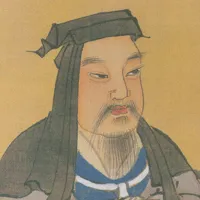
Cao Cao (155-220) was a prominent statesman, military strategist, and poet during the late Eastern Han dynasty. He rose to power during a period of chaos, welcoming the Han emperor to his court and 'commanding the lords in the emperor's name.' After defeating Yuan Shao at the Battle of Guandu, he gradually unified northern China. Known as both 'a capable minister in times of peace and a cunning hero in times of chaos,' he is one of the most complex figures in Chinese history.

Su Shi (1037-1101), courtesy name Zizhan, also known as Su Dongpo, was one of the greatest literary figures of the Song dynasty. He excelled in poetry, prose, calligraphy, and painting. His bold and expansive ci poetry pioneered the 'heroic' school. Despite a turbulent political career with frequent demotions and exiles, he maintained an optimistic and philosophical outlook, becoming an enduring symbol of resilience and artistic achievement in Chinese culture.
Jungian Cognitive Functions
ENTP's function order is Ne → Ti → Fe → Si: Dominant Function Ne, Auxiliary Function Ti, Tertiary Function Fe, Inferior Function Si; the shadow functions are Ni, Te, Fi, Se.
Jungian Functions · Positive
Extraverted Intuition (Ne) occupies the dominant function position for ENTP.
The Dominant Function is the most core psychological trait of an individual, naturally developing from childhood and becoming the most proficient and trusted function in adulthood, being prioritized in most situations and greatly influencing one's cognitive style, decision-making approach, and behavioral patterns.
This function is the core of one's inner world, representing the most confident and proud part of oneself. It plays a decisive role in the individual's conscious orientation and source of strength, and is key to self-identity and potential realization.
The advantage of the Dominant Function lies in its naturalness and efficiency, as it is the function the individual is most accustomed to and can use with the least effort, providing strong internal motivation and clear decision-making direction. It helps the individual maintain confidence and decisiveness when facing challenges, and is an important source of achievement and energy recovery. However, the Dominant Function also has potential drawbacks. Due to its power and naturalness, the individual may become overly dependent on this function, neglecting the development and use of other psychological functions. This over-reliance can sometimes lead to incompetence or maladjustment when facing problems that require other functions. Additionally, overuse of the Dominant Function may make the individual stubborn and narrow-minded, unable to accept and understand perspectives and methods inconsistent with their dominant function.
The individual typically exhibits the following characteristics: they are very sensitive to possibilities and potential opportunities, can quickly construct multiple options and plans in their mind; they enjoy exploring new ideas and concepts, and are full of curiosity about novel things; they can flexibly adapt to change, not bound by tradition and convention; when solving problems, they tend to think from different angles, seeking innovative solutions; they usually have active thinking and can easily jump between different ideas and topics. However, this dominant function also has some drawbacks, such as potentially overlooking current reality and details due to excessive focus on future possibilities; difficulty concentrating on a specific task due to having too many ideas; feeling uncomfortable in situations requiring precise and systematic work; and sometimes appearing impractical or unrealistic due to excessive pursuit of possibilities.
Introverted Thinking (Ti) occupies the auxiliary function position for ENTP.
The Auxiliary Function is the supporting function that assists the Dominant Function, working in coordination with it. When the Dominant Function is extraverted, the Auxiliary Function is introverted, and vice versa. The Auxiliary Function operates when the individual interacts with the outside world, helping them adapt and communicate in social environments. Unlike the Dominant Function, it is not innate but usually requires corresponding social environments to activate, giving it the strongest social attributes.
The development of the Auxiliary Function contributes to the individual's sense of responsibility and reliability in society, being the part that others consider most reliable. When the Auxiliary Function is well-developed, it helps the individual develop a positive self-identity regarding their own responsibility and reliability. Among the conscious functions, the Auxiliary Function, together with the Dominant Function, are the most commonly used and most visible functions, working together to help the individual gather and organize information, with the Dominant Function taking the lead and the Auxiliary Function providing support.
The individual tends to use logic and analysis to assist their Dominant Function, but unlike Ti as the Dominant Function, this logical use is usually more flexible and adaptive. The individual may take a more pragmatic and objective approach to problem-solving after deep thinking and analysis. They may show attention to detail in decision-making and be able to identify and challenge their own assumptions. They may also appear more conservative and cautious in emotional expression and social interactions, as they tend to think deeply before acting. Additionally, such individuals may be more inclined to introspect and think independently when facing conflict or pressure, rather than seeking external guidance or help. They may demonstrate deep understanding of theories and mastery of complex concepts in their personal interests and professional fields.
Extraverted Feeling (Fe) occupies the tertiary function position for ENTP.
The Tertiary Function represents a pure and unstable part of the individual, carrying a carefree quality. The Tertiary Function is like a willful teenager who never grows up, capable of displaying creativity and vitality, bringing life and joy to adult existence. However, it is emotionally very sensitive and fragile, usually not relied upon for serious or important matters, as its unstable nature may cause the individual to deviate from the norm.
In the process of personality development, the Tertiary Function may emerge in stress-free situations, adding joy to life, but when encountering challenges or pressure, it may not be seen as a reliable problem-solving tool. Its development and expression are related to the individual's personality type and the roles of other functions. The Tertiary Function is usually called upon when the Auxiliary Function cannot adequately handle a task. In daily life, it may not be the most prominent or frequently used function, but in specific situations, it can provide unique perspectives and problem-solving methods. As individuals deepen their understanding of their psychological type and increase self-awareness, the Tertiary Function can be better recognized and applied, promoting comprehensive personal development.
The individual may exhibit a pursuit of harmony and consensus in social interactions, but this pursuit may not be as obvious or direct as those who have Fe as their Dominant or Auxiliary Function. They may show sensitivity to others' emotions in teamwork, but this sensitivity may be more subtle, needing specific social situations to be fully demonstrated. Additionally, they may appear somewhat indecisive in handling interpersonal relationships, as they are seeking others' approval and support while also trying to balance their own personal values and goals. In stressful or conflict situations, these individuals may show excessive concern about external evaluation, sometimes sacrificing their true feelings to accommodate others or avoid conflict. However, when they can successfully integrate Fe with their Dominant and Auxiliary Functions, they can become individuals who both understand others' emotional needs and maintain personal independence.
Introverted Sensing (Si) occupies the inferior function position for ENTP.
The Inferior Function is not prominent in the individual's consciousness, often undeveloped and unrecognized before middle age, causing it to manifest in a chaotic and destructive way in early life, inducing fear and anxiety. It represents certain unmet needs or unrecognized potentials deep within the individual, which conflict with the Dominant Function's values and are therefore ignored or suppressed. However, over time, the individual begins to recognize the importance of the Inferior Function and learns how to utilize and develop it, making it a key part of promoting personal growth and achieving life balance.
In the individual's psychological development, the Inferior Function may be triggered when encountering stress, threats, or challenges, at which point it may manifest in a negative or defensive way. The individual's attitude toward the Inferior Function is complex -- they may reject and devalue it, but may also begin to appreciate and utilize its unique value after self-exploration and growth. Developing the Inferior Function helps the individual recognize their full complexity, including previously ignored or suppressed parts. By actively accepting and cultivating the Inferior Function, the individual can more fully understand themselves, more effectively cope with life's various challenges, and achieve higher levels of self-actualization and psychological health.
The individual may exhibit neglect of detail and experience, difficulty learning from or applying past experience, slow reaction to change and new situations, insufficient appreciation of habits and traditions, tendency to overlook practical needs and details in daily life, potential anxiety and unease when facing pressure and challenges, difficulty adapting to rapidly changing environments, and potential over-reliance on intuition and abstract thinking in decision-making while neglecting practical operations and reality, which may lead to difficulties and challenges in practical life.
Jungian Functions · Shadow
Introverted Intuition (Ni) occupies the opposing personality position for ENTP.
The Opposing Personality stands in opposition to the Dominant Function, posing a potential threat to it. The Opposing Personality typically does not appear proactively, but may be triggered under specific circumstances, such as challenges or pressure. Because the Opposing Personality is inherently opposed to the Dominant Function in nature, it may bring a sense of discomfort when operating, even if it is necessary and correct in certain situations. When the individual's Dominant Function is fully developed and utilized, the Opposing Personality, as its counterpart, often remains suppressed. However, when the individual encounters problems or situations that the Dominant Function cannot solve, the Opposing Personality may be activated as a supplementary or emergency mechanism.
Although the Opposing Personality may initially manifest as passive-aggressive or self-defensive attitudes, if properly recognized and utilized, it can enrich the individual's psychological perspective and provide new problem-solving angles. In practical application, understanding the existence and role of the Opposing Personality is significant for self-awareness and growth. It can help individuals identify and process internal self-conflicts, while also promoting understanding and acceptance of different viewpoints and methods. Through recognizing and integrating the Opposing Personality, individuals can more comprehensively develop their psychological capabilities, improving adaptability and problem-solving ability.
The individual may have difficulty directly accessing and understanding deep intuitive insights and future-oriented imagination. This may lead to uncertainty about long-term planning, or unconsciously rejecting the guidance of deep intuition and instead over-relying on logic or physical evidence. The individual may envy those who can naturally envision the future and act accordingly, while feeling uneasy when their own future direction is unclear.
Extraverted Thinking (Te) occupies the critical parent position for ENTP.
The Critical Parent function plays the role of a critic in the individual's psychological structure, appearing with an arrogant, cold, and forceful attitude, finding and suppressing the opponent's weaknesses to maintain inner harmony. Although it can also demonstrate a strong sense of power when passively operating, its essence is outwardly strong but inwardly weak, more like an emergency mechanism compared to the natural and mature Dominant Function. The Critical Parent function has a strong presence and is sometimes mistaken for the Dominant Function, especially when the individual faces pressure and it becomes a prominent psychological response.
Although this function's use may help the individual gain advantages in debate, it may also bring bias and unfair evaluation of other viewpoints. The formation of the Critical Parent function is closely related to the individual's psychological development, gradually forming through the interaction between consciousness and the unconscious. When the individual's Dominant and Auxiliary Functions cannot effectively cope with external environments or internal conflicts, the Critical Parent function is activated as a supplementary mechanism. Its existence reveals perspectives and abilities the individual may overlook. Although it may not be the individual's most natural or mature function, in specific situations, it can provide necessary psychological support and protection. Through recognizing and understanding the Critical Parent function's role, individuals can better manage their psychological responses and promote personal growth and development.
The individual may be excessively focused on their shortcomings in logical expression, feeling inferior or worried that their viewpoints are not forceful enough. Te in this position may also prompt the individual to become extremely critical at times, being highly sensitive to logical errors in the surrounding environment.
Introverted Feeling (Fi) occupies the trickster function position for ENTP.
The Trickster Function is the shadow of the "Eternal Child." When the Tertiary Function encounters setbacks and feels disappointed but unwilling to admit helplessness, the Trickster Function is awakened. Since the Tertiary Function itself is unstable, the third and seventh functions usually appear in pairs, and the Trickster Function is the most uncontrollable of all eight functions. It transforms our disappointment into anger toward the outside world, accompanied by loss of control and antisocial tendencies. Like a mischievous child, it uses tantrums, disruption, trickery, deception, and manipulation to rationalize frustration, protecting one's "inner child." It can also create illusions or lead to wrong decisions. Like a trickster, it relieves inner pressure through self-deprecation and self-ridicule, operating in a comical and awkward manner.
The individual may have difficulty perceiving or understanding their own emotional needs, and may even express emotions in a flippant or inappropriate manner without realizing it. Fi in this position may lead to awkwardness or misunderstandings in social interactions, as the individual may unconsciously handle deep emotional issues through humor or avoidance, rather than facing them directly.
Extraverted Sensing (Se) occupies the demon function position for ENTP.
The Demon Function belongs to the realm of the unconscious in personality. We typically don't know how to use it intentionally; instead, it erupts suddenly without awareness. It can deliver the most valuable insights, but since we tend to unconsciously devalue and undermine it -- because the perspective it represents is the one we most lack -- we find it very difficult to directly utilize it. The Demon Function is typically undeveloped before middle age, appearing in youth as a disruptive form that induces fear and other negative emotions.
Only as age increases and the individual learns to coordinate and trust this function can it gradually develop and become a bridge connecting to the unconscious, helping balance the individual's life and ideals. In some cases, if the individual experiences severe psychological trauma or is in a rapid development period of the Tertiary Function, the Demon Function's usage frequency may become abnormally elevated. The Demon Function may disturb self-judgment, plunging the individual into chaos, reducing openness, leading to withdrawal and confusion. Nevertheless, if the individual can develop and integrate the Demon Function, it has the potential to transform into a positive force, bringing profound insight and growth.
The individual may feel a deep unease or fear about the material world, or unconsciously refuse to accept the realistic limitations of the body or environment. In extreme cases, this may lead to avoidance of daily responsibilities, neglect of health and safety, or deep suppression of sensory enjoyment, potentially causing psychosomatic problems.