

ESTJ (Executive): Jungian cognitive functions and 16-type personality profile.
16-Type Personality Profile
Executives are known for their organizational abilities, pragmatism, and emphasis on order. Making up about 8-12% of the population, they are typically seen as traditional leaders who excel at managing and maintaining systems and processes. Executives value efficiency and results. They are usually practical decision-makers who prefer to drive progress through clear guidance and planning.
Characteristics
Pragmatic and Organized: Executives tend toward pragmatic and organized approaches. They prefer clear rules and expectations, and can effectively manage resources and personnel.
Decisive: People of this type are usually very decisive and direct when making decisions. They rely on known facts and logic to guide their judgment.
Strengths
Leadership Ability: Executives have natural leadership abilities. They can clearly communicate goals and expectations, and can motivate team members to work toward common objectives.
Strong Sense of Responsibility: Executives take their responsibilities and commitments very seriously. They work hard to ensure everything proceeds according to plan and that results meet expectations.
Blind Spots
Can Be Too Stubborn: Executives may sometimes be overly insistent on their own views, unwilling to accept new ideas or adapt to changes.
Lack of Flexibility: Due to their emphasis on tradition and existing systems, Executives may lack flexibility when facing novel and unconventional situations.
Love
Loyal and Stable Partners: In romantic relationships, Executives seek stability and loyalty. They tend toward traditional relationship models, valuing family and long-term commitment.
Practical and Responsible: Executives show a practical and responsible side in relationships. They work hard to ensure the safety and comfort of their family and partner.
Friendship
Reliable Friends: As friends, Executives are reliable and loyal. They tend toward long-term, deep friendships rather than broad social networks.
Practical and Straightforward: Executives are typically practical and straightforward friends. They are willing to provide practical help and advice, and usually don't get overly caught up in emotional details.
Career Tendencies
Suitable Career Types: Executives are well-suited for careers that require organization, management skills, and pragmatism.
Typical Suitable Careers: Corporate executive, administrative manager, financial analyst, lawyer, military officer, government official. In these careers, they can fully leverage their organizational abilities, decisiveness, and sense of responsibility.
Representative Figures
Based on community vote data
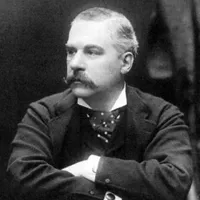
John Pierpont Morgan (1837-1913) was one of the most influential financial titans in American modern history. Through a series of reorganizations and acquisitions, he built a vast financial and industrial empire, shaping companies like General Electric and U.S. Steel. During two financial crises in 1895 and 1907, he leveraged his personal prestige to organize bailouts, temporarily serving as a de facto central bank and stabilizing the American financial system. His power and influence ultimately prompted the creation of the Federal Reserve System.

Henry Ford (1863-1947), American industrialist and innovator, founder of Ford Motor Company. He introduced the Model T in 1908 and pioneered the assembly line production method in 1913, which completely revolutionized modern industrial manufacturing. This dramatically reduced production costs, transforming the automobile from a luxury item into something ordinary families could afford, ushering America into the automobile age.
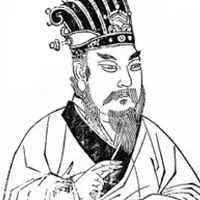
Yuan Shao (?-202 AD) was a powerful warlord during the late Eastern Han dynasty, scion of the prestigious Yuan family. He led the coalition against the tyrant Dong Zhuo and at his peak controlled four provinces, becoming the most powerful lord in northern China. However, he was decisively defeated by Cao Cao at the Battle of Guandu -- one of history's great examples of a smaller force overcoming a larger one -- and died two years later.
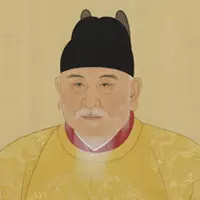
Zhu Yuanzhang (1328-1398) was the founding emperor of the Ming dynasty. Born into extreme poverty -- he worked as a cowherd and monk -- he joined a peasant uprising during the chaotic late Yuan period. Through exceptional military and political talent, he eliminated rival warlords, declared the Ming dynasty in 1368, and drove out the Mongol Yuan. He strengthened central authority, abolished the chancellorship, and implemented reforms, laying the foundation for nearly three hundred years of Ming rule.
Jungian Cognitive Functions
ESTJ's function order is Te → Si → Ne → Fi: Dominant Function Te, Auxiliary Function Si, Tertiary Function Ne, Inferior Function Fi; the shadow functions are Ti, Se, Ni, Fe.
Jungian Functions · Positive
Extraverted Thinking (Te) occupies the dominant function position for ESTJ.
The Dominant Function is the most core psychological trait of an individual, naturally developing from childhood and becoming the most proficient and trusted function in adulthood, being prioritized in most situations and greatly influencing one's cognitive style, decision-making approach, and behavioral patterns.
This function is the core of one's inner world, representing the most confident and proud part of oneself. It plays a decisive role in the individual's conscious orientation and source of strength, and is key to self-identity and potential realization.
The advantage of the Dominant Function lies in its naturalness and efficiency, as it is the function the individual is most accustomed to and can use with the least effort, providing strong internal motivation and clear decision-making direction. It helps the individual maintain confidence and decisiveness when facing challenges, and is an important source of achievement and energy recovery. However, the Dominant Function also has potential drawbacks. Due to its power and naturalness, the individual may become overly dependent on this function, neglecting the development and use of other psychological functions. This over-reliance can sometimes lead to incompetence or maladjustment when facing problems that require other functions. Additionally, overuse of the Dominant Function may make the individual stubborn and narrow-minded, unable to accept and understand perspectives and methods inconsistent with their dominant function.
The individual typically manifests as strongly logical, excellent at organizing, decisive in decision-making, focused on efficiency and results. They tend to analyze problems objectively, pursue facts and data, are good at making and executing plans, and have a clear sense of direction for work and goals. Strengths include high efficiency, good time management and problem-solving abilities, and potential for leadership roles in teams. Weaknesses may include neglect of emotions, being potentially too strict or stubborn, and appearing less adaptable when facing tasks requiring flexibility and creativity. Additionally, Te-dominant individuals may sometimes appear direct or even cold in interpersonal interactions, as they are more focused on task completion than personal emotions.
Introverted Sensing (Si) occupies the auxiliary function position for ESTJ.
The Auxiliary Function is the supporting function that assists the Dominant Function, working in coordination with it. When the Dominant Function is extraverted, the Auxiliary Function is introverted, and vice versa. The Auxiliary Function operates when the individual interacts with the outside world, helping them adapt and communicate in social environments. Unlike the Dominant Function, it is not innate but usually requires corresponding social environments to activate, giving it the strongest social attributes.
The development of the Auxiliary Function contributes to the individual's sense of responsibility and reliability in society, being the part that others consider most reliable. When the Auxiliary Function is well-developed, it helps the individual develop a positive self-identity regarding their own responsibility and reliability. Among the conscious functions, the Auxiliary Function, together with the Dominant Function, are the most commonly used and most visible functions, working together to help the individual gather and organize information, with the Dominant Function taking the lead and the Auxiliary Function providing support.
The individual exhibits sensitivity to detail and appreciation for experience. They tend to understand the world through past experiences and can remember large amounts of facts and data. In decision-making, they may rely on past experiences and habits rather than solely on logic or intuition. Additionally, they may react slowly to change, preferring stable and predictable environments. They may also be cautious about new experiences, as these may conflict with their existing experience and knowledge. Nevertheless, they can enhance their observational skills and environmental adaptability through introverted sensing, helping them better understand and cope with the world around them.
Extraverted Intuition (Ne) occupies the tertiary function position for ESTJ.
The Tertiary Function represents a pure and unstable part of the individual, carrying a carefree quality. The Tertiary Function is like a willful teenager who never grows up, capable of displaying creativity and vitality, bringing life and joy to adult existence. However, it is emotionally very sensitive and fragile, usually not relied upon for serious or important matters, as its unstable nature may cause the individual to deviate from the norm.
In the process of personality development, the Tertiary Function may emerge in stress-free situations, adding joy to life, but when encountering challenges or pressure, it may not be seen as a reliable problem-solving tool. Its development and expression are related to the individual's personality type and the roles of other functions. The Tertiary Function is usually called upon when the Auxiliary Function cannot adequately handle a task. In daily life, it may not be the most prominent or frequently used function, but in specific situations, it can provide unique perspectives and problem-solving methods. As individuals deepen their understanding of their psychological type and increase self-awareness, the Tertiary Function can be better recognized and applied, promoting comprehensive personal development.
The individual may exhibit curiosity about new ideas and possibilities, but this may be accompanied by a degree of instability and impulsiveness. The individual may be interested in exploring unknown territories but lack sufficient experience and judgment to effectively filter and implement these ideas. They may frequently switch between different ideas and plans, sometimes appearing distracted or unfocused. Additionally, when facing pressure or challenges, immature extraverted intuition may cause the individual to feel anxious or uneasy, as they may not yet have learned how to effectively utilize this function to adapt to the environment or solve problems. However, over time and with personal growth, extraverted intuition can gradually develop into a powerful tool, helping the individual progress in creative thinking and strategic planning.
Introverted Feeling (Fi) occupies the inferior function position for ESTJ.
The Inferior Function is not prominent in the individual's consciousness, often undeveloped and unrecognized before middle age, causing it to manifest in a chaotic and destructive way in early life, inducing fear and anxiety. It represents certain unmet needs or unrecognized potentials deep within the individual, which conflict with the Dominant Function's values and are therefore ignored or suppressed. However, over time, the individual begins to recognize the importance of the Inferior Function and learns how to utilize and develop it, making it a key part of promoting personal growth and achieving life balance.
In the individual's psychological development, the Inferior Function may be triggered when encountering stress, threats, or challenges, at which point it may manifest in a negative or defensive way. The individual's attitude toward the Inferior Function is complex -- they may reject and devalue it, but may also begin to appreciate and utilize its unique value after self-exploration and growth. Developing the Inferior Function helps the individual recognize their full complexity, including previously ignored or suppressed parts. By actively accepting and cultivating the Inferior Function, the individual can more fully understand themselves, more effectively cope with life's various challenges, and achieve higher levels of self-actualization and psychological health.
The individual may exhibit distrust or difficulty identifying their own emotions, leading to confusion or discomfort when handling personal emotions. They may appear hesitant or unconfident when expressing personal values and emotional needs, and may sometimes over-rely on external evaluations or social norms to guide their emotional responses. Additionally, this position of Fi may cause the individual to feel emotionally disconnected from others, as they may have difficulty understanding or expressing deep personal feelings, and may struggle to effectively use their emotional resources when facing conflict or pressure. However, the Inferior Function also represents potential space for growth and development; through conscious effort, they can gradually learn to better understand and express their emotions, making progress in personal development.
Jungian Functions · Shadow
Introverted Thinking (Ti) occupies the opposing personality position for ESTJ.
The Opposing Personality stands in opposition to the Dominant Function, posing a potential threat to it. The Opposing Personality typically does not appear proactively, but may be triggered under specific circumstances, such as challenges or pressure. Because the Opposing Personality is inherently opposed to the Dominant Function in nature, it may bring a sense of discomfort when operating, even if it is necessary and correct in certain situations. When the individual's Dominant Function is fully developed and utilized, the Opposing Personality, as its counterpart, often remains suppressed. However, when the individual encounters problems or situations that the Dominant Function cannot solve, the Opposing Personality may be activated as a supplementary or emergency mechanism.
Although the Opposing Personality may initially manifest as passive-aggressive or self-defensive attitudes, if properly recognized and utilized, it can enrich the individual's psychological perspective and provide new problem-solving angles. In practical application, understanding the existence and role of the Opposing Personality is significant for self-awareness and growth. It can help individuals identify and process internal self-conflicts, while also promoting understanding and acceptance of different viewpoints and methods. Through recognizing and integrating the Opposing Personality, individuals can more comprehensively develop their psychological capabilities, improving adaptability and problem-solving ability.
The individual may have difficulty accepting viewpoints inconsistent with their internal logic and principles, and may unconsciously criticize or resist information or people that challenge their internal logical system. This function position may lead to excessive criticism of others' logical rigor, or feeling defensive when facing logical challenges.
Extraverted Sensing (Se) occupies the critical parent position for ESTJ.
The Critical Parent function plays the role of a critic in the individual's psychological structure, appearing with an arrogant, cold, and forceful attitude, finding and suppressing the opponent's weaknesses to maintain inner harmony. Although it can also demonstrate a strong sense of power when passively operating, its essence is outwardly strong but inwardly weak, more like an emergency mechanism compared to the natural and mature Dominant Function. The Critical Parent function has a strong presence and is sometimes mistaken for the Dominant Function, especially when the individual faces pressure and it becomes a prominent psychological response.
Although this function's use may help the individual gain advantages in debate, it may also bring bias and unfair evaluation of other viewpoints. The formation of the Critical Parent function is closely related to the individual's psychological development, gradually forming through the interaction between consciousness and the unconscious. When the individual's Dominant and Auxiliary Functions cannot effectively cope with external environments or internal conflicts, the Critical Parent function is activated as a supplementary mechanism. Its existence reveals perspectives and abilities the individual may overlook. Although it may not be the individual's most natural or mature function, in specific situations, it can provide necessary psychological support and protection. Through recognizing and understanding the Critical Parent function's role, individuals can better manage their psychological responses and promote personal growth and development.
The individual may be excessively critical of details, set overly high standards for immediate experience, causing themselves or those around them to feel pressure and unease. This function may also cause hypersensitivity to physical sensory input, such as excessive sensitivity to noise or touch.
Introverted Intuition (Ni) occupies the trickster function position for ESTJ.
The Trickster Function is the shadow of the "Eternal Child." When the Tertiary Function encounters setbacks and feels disappointed but unwilling to admit helplessness, the Trickster Function is awakened. Since the Tertiary Function itself is unstable, the third and seventh functions usually appear in pairs, and the Trickster Function is the most uncontrollable of all eight functions. It transforms our disappointment into anger toward the outside world, accompanied by loss of control and antisocial tendencies. Like a mischievous child, it uses tantrums, disruption, trickery, deception, and manipulation to rationalize frustration, protecting one's "inner child." It can also create illusions or lead to wrong decisions. Like a trickster, it relieves inner pressure through self-deprecation and self-ridicule, operating in a comical and awkward manner.
The individual may completely ignore or fail to recognize the role of intuitive abilities in life. They may find themselves occasionally having profound intuitive insights but immediately dismissing them as coincidental or unimportant. In this position, Ni's expression may use humor or flippancy to mask their discomfort or ignorance about deeper meaning and future prediction.
Extraverted Feeling (Fe) occupies the demon function position for ESTJ.
The Demon Function belongs to the realm of the unconscious in personality. We typically don't know how to use it intentionally; instead, it erupts suddenly without awareness. It can deliver the most valuable insights, but since we tend to unconsciously devalue and undermine it -- because the perspective it represents is the one we most lack -- we find it very difficult to directly utilize it. The Demon Function is typically undeveloped before middle age, appearing in youth as a disruptive form that induces fear and other negative emotions.
Only as age increases and the individual learns to coordinate and trust this function can it gradually develop and become a bridge connecting to the unconscious, helping balance the individual's life and ideals. In some cases, if the individual experiences severe psychological trauma or is in a rapid development period of the Tertiary Function, the Demon Function's usage frequency may become abnormally elevated. The Demon Function may disturb self-judgment, plunging the individual into chaos, reducing openness, leading to withdrawal and confusion. Nevertheless, if the individual can develop and integrate the Demon Function, it has the potential to transform into a positive force, bringing profound insight and growth.
The individual may feel extremely uncomfortable when handling complex interpersonal relationships and emotions, sometimes avoiding emotionally deep communication because it may trigger inner unease or chaos. Under extreme stress, the eighth function may erupt in a destructive way, such as sudden emotional outbursts or groundless accusations toward others, all results of the individual trying to process emotions they cannot understand or manage.