

ISFP (Adventurer): Jungian cognitive functions and 16-type personality profile.
16-Type Personality Profile
Adventurers are known for their flexibility, sensitivity, and exploratory spirit. Making up about 5-9% of the population, they are typically curious individuals who love freedom. Adventurers prefer to live in the moment, exploring the world with an open mind. They value personal experiences and self-expression, tending to explore their identity and emotions through art, music, or other creative activities.
Characteristics
Appreciation of Beauty and Aesthetics: Adventurers have a deep perception of beauty and aesthetics. They are usually particularly sensitive to art, nature, and sensory experiences.
Free and Independent: People of this type cherish personal freedom and independence, disliking being bound by rules or traditions. They tend to live at their own pace and in their own style.
Strengths
Highly Adaptable: Adventurers show remarkable flexibility in adapting to new environments and situations. They can find new opportunities within change.
Creative and Intuitive: Adventurers excel in creative thinking and intuitive perception. They can view the world from unique perspectives and create distinctive works and solutions.
Blind Spots
Sometimes Too Carefree: Adventurers can sometimes be overly carefree, potentially lacking long-term planning or consideration for the future.
Conflict Avoidance: Due to their preference for harmony, Adventurers may avoid confronting conflicts directly, which can sometimes hinder them from expressing their needs or resolving problems.
Love
Loyal and Deeply Affectionate Partners: In romantic relationships, Adventurers seek deep and authentic connections. They tend to interact with their partners in a loyal and intuitive way, valuing shared feelings and experiences.
Seeking Resonance: Adventurers wish to share deep emotions and interests with their partners. They appreciate partners who can understand and accept their true selves.
Friendship
Genuine Friends: As friends, Adventurers are genuine and considerate. They enjoy engaging in creative activities and adventures with friends.
Good Listeners: Adventurers are excellent listeners. They are willing to listen to friends' thoughts and feelings, providing support and understanding.
Career Tendencies
Suitable Career Types: Adventurers are well-suited for careers that require creativity, intuition, and personal expression.
Typical Suitable Careers: Adventurers may excel in the following careers: artist, designer, photographer, musician, writer, chef. In these careers, they can fully leverage their creativity, intuition, and appreciation of beauty.
Representative Figures
Based on community vote data

Michael Jackson (1958-2009), American singer, songwriter, and dancer, honored as the 'King of Pop.' He rose to stardom as lead singer of the Jackson 5 and established his solo dominance with the album 'Thriller,' which became the best-selling album of all time. He fused pop, rock, funk, and R&B, reinventing live performance with his unique moonwalk and stage presence. He won 13 Grammy Awards and was inducted into the Rock and Roll Hall of Fame. His music, dance, and philanthropy continue to influence the world.

Bob Dylan (born 1941) is an American singer-songwriter and cultural icon. He rose to fame in the 1960s with protest songs like 'Blowin' in the Wind,' becoming the voice of civil rights and anti-war movements. He broke folk boundaries, pioneering 'folk rock,' with lyrics full of poetic imagery and social commentary. In 2016, he received the Nobel Prize in Literature 'for having created new poetic expressions within the great American song tradition,' becoming the first musician to receive this honor.
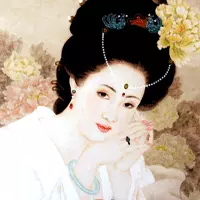
Yang Yuhuan (719-756), known as Yang Guifei (Imperial Consort Yang), was one of the Four Beauties of ancient China. Originally a wife of one of Emperor Xuanzong's sons, she later became the emperor's most beloved consort. Her family gained enormous power through her influence, contributing to political corruption. When the An Lushan Rebellion erupted, the fleeing emperor's guards demanded her execution at Mawei Station as a condition for continuing to serve. Her tragic story has been an enduring theme in Chinese literature and art.

Li Qingzhao (1084-1155), courtesy name Yi'an, was the most outstanding female poet in Chinese literary history and a representative of the 'graceful and restrained' school of ci poetry. Her early works are delicate and beautiful, depicting refined life and natural scenery. After the fall of the Northern Song, having lost both her homeland and her husband, her style became melancholic and sorrowful. Her work 'Slow, Slow Tune' became the representative masterpiece of her later period, and she is honored as 'the foremost among ci poets.'
Jungian Cognitive Functions
ISFP's function order is Fi → Se → Ni → Te: Dominant Function Fi, Auxiliary Function Se, Tertiary Function Ni, Inferior Function Te; the shadow functions are Fe, Si, Ne, Ti.
Jungian Functions · Positive
Introverted Feeling (Fi) occupies the dominant function position for ISFP.
The Dominant Function is the most core psychological trait of an individual, naturally developing from childhood and becoming the most proficient and trusted function in adulthood, being prioritized in most situations and greatly influencing one's cognitive style, decision-making approach, and behavioral patterns.
This function is the core of one's inner world, representing the most confident and proud part of oneself. It plays a decisive role in the individual's conscious orientation and source of strength, and is key to self-identity and potential realization.
The advantage of the Dominant Function lies in its naturalness and efficiency, as it is the function the individual is most accustomed to and can use with the least effort, providing strong internal motivation and clear decision-making direction. It helps the individual maintain confidence and decisiveness when facing challenges, and is an important source of achievement and energy recovery. However, the Dominant Function also has potential drawbacks. Due to its power and naturalness, the individual may become overly dependent on this function, neglecting the development and use of other psychological functions. This over-reliance can sometimes lead to incompetence or maladjustment when facing problems that require other functions. Additionally, overuse of the Dominant Function may make the individual stubborn and narrow-minded, unable to accept and understand perspectives and methods inconsistent with their dominant function.
The individual typically exhibits high personal values and moral standards, is very sensitive to emotions and inner experience, and tends to understand and evaluate the external world through a personal lens. They value authenticity and personal connection, tending to consider emotional and value factors in decision-making. Strengths include deep self-awareness, sensitivity to others' emotions, strong personal beliefs and values, and the ability to stand firm when facing conflict. Weaknesses may include excessive introspection, emotional stubbornness, potential feelings of isolation, and challenges when facing external pressure that conflicts with personal values. Fi-dominant individuals may appear somewhat reserved in social situations and may sometimes conflict with others due to being too insistent on their own emotions and values.
Extraverted Sensing (Se) occupies the auxiliary function position for ISFP.
The Auxiliary Function is the supporting function that assists the Dominant Function, working in coordination with it. When the Dominant Function is extraverted, the Auxiliary Function is introverted, and vice versa. The Auxiliary Function operates when the individual interacts with the outside world, helping them adapt and communicate in social environments. Unlike the Dominant Function, it is not innate but usually requires corresponding social environments to activate, giving it the strongest social attributes.
The development of the Auxiliary Function contributes to the individual's sense of responsibility and reliability in society, being the part that others consider most reliable. When the Auxiliary Function is well-developed, it helps the individual develop a positive self-identity regarding their own responsibility and reliability. Among the conscious functions, the Auxiliary Function, together with the Dominant Function, are the most commonly used and most visible functions, working together to help the individual gather and organize information, with the Dominant Function taking the lead and the Auxiliary Function providing support.
The individual exhibits high sensitivity to the surrounding environment and keen observational skills for details, tending to acquire information through direct experience, and being able to quickly adapt to environmental changes. These individuals are usually decisive in action, enjoy pursuing stimulation and adventure, are good at using their senses to explore the world, and can react quickly. In social situations, they may demonstrate strong social skills, being able to easily connect and interact with others. They may also show strong interest in new experiences and opportunities, willing to try different activities and experiences. Additionally, they may have a certain pursuit of the material world and sensory enjoyment, appreciating the fine things in life. However, over-reliance on Se may lead to easy distraction or excessive focus on short-term gratification, neglecting long-term planning and inner reflection.
Introverted Intuition (Ni) occupies the tertiary function position for ISFP.
The Tertiary Function represents a pure and unstable part of the individual, carrying a carefree quality. The Tertiary Function is like a willful teenager who never grows up, capable of displaying creativity and vitality, bringing life and joy to adult existence. However, it is emotionally very sensitive and fragile, usually not relied upon for serious or important matters, as its unstable nature may cause the individual to deviate from the norm.
In the process of personality development, the Tertiary Function may emerge in stress-free situations, adding joy to life, but when encountering challenges or pressure, it may not be seen as a reliable problem-solving tool. Its development and expression are related to the individual's personality type and the roles of other functions. The Tertiary Function is usually called upon when the Auxiliary Function cannot adequately handle a task. In daily life, it may not be the most prominent or frequently used function, but in specific situations, it can provide unique perspectives and problem-solving methods. As individuals deepen their understanding of their psychological type and increase self-awareness, the Tertiary Function can be better recognized and applied, promoting comprehensive personal development.
The individual may show strong interest in deep meanings and future possibilities, but these intuitions may lack practical application and reality testing, causing their ideas to sometimes appear overly idealistic or impractical. The Tertiary Function Ni may also challenge tradition and convention, seeking innovation and change, but this challenge may lack systematicity and coherence, as the Tertiary Function is not as powerful or influential as the Dominant Function. Additionally, since Ni is the Tertiary Function, it may more easily manifest under pressure, appearing as excessive anxiety about the unknown or distrust of reality, sometimes leading the individual to overlook real-world limitations and others' feedback in pursuit of ideals.
Extraverted Thinking (Te) occupies the inferior function position for ISFP.
The Inferior Function is not prominent in the individual's consciousness, often undeveloped and unrecognized before middle age, causing it to manifest in a chaotic and destructive way in early life, inducing fear and anxiety. It represents certain unmet needs or unrecognized potentials deep within the individual, which conflict with the Dominant Function's values and are therefore ignored or suppressed. However, over time, the individual begins to recognize the importance of the Inferior Function and learns how to utilize and develop it, making it a key part of promoting personal growth and achieving life balance.
In the individual's psychological development, the Inferior Function may be triggered when encountering stress, threats, or challenges, at which point it may manifest in a negative or defensive way. The individual's attitude toward the Inferior Function is complex -- they may reject and devalue it, but may also begin to appreciate and utilize its unique value after self-exploration and growth. Developing the Inferior Function helps the individual recognize their full complexity, including previously ignored or suppressed parts. By actively accepting and cultivating the Inferior Function, the individual can more fully understand themselves, more effectively cope with life's various challenges, and achieve higher levels of self-actualization and psychological health.
The individual may face challenges in logical analysis and organizational ability, as they may be more inclined to rely on intuition and emotions to handle problems rather than strictly following logic and facts. This may cause discomfort when facing tasks requiring strict logic and planning, easily leading to pressure and anxiety. Additionally, they may tend to rely on personal values and inner feelings rather than objective data and external standards in decision-making. In teams, they may be more inclined to play supporter and coordinator roles rather than leader and planner. They may encounter difficulties in execution details and long-term planning, and may need extra help and support to improve these abilities. However, this Inferior Function position also means they have the opportunity to develop these abilities through effort and self-improvement, achieving personal growth and more comprehensive self-development.
Jungian Functions · Shadow
Extraverted Feeling (Fe) occupies the opposing personality position for ISFP.
The Opposing Personality stands in opposition to the Dominant Function, posing a potential threat to it. The Opposing Personality typically does not appear proactively, but may be triggered under specific circumstances, such as challenges or pressure. Because the Opposing Personality is inherently opposed to the Dominant Function in nature, it may bring a sense of discomfort when operating, even if it is necessary and correct in certain situations. When the individual's Dominant Function is fully developed and utilized, the Opposing Personality, as its counterpart, often remains suppressed. However, when the individual encounters problems or situations that the Dominant Function cannot solve, the Opposing Personality may be activated as a supplementary or emergency mechanism.
Although the Opposing Personality may initially manifest as passive-aggressive or self-defensive attitudes, if properly recognized and utilized, it can enrich the individual's psychological perspective and provide new problem-solving angles. In practical application, understanding the existence and role of the Opposing Personality is significant for self-awareness and growth. It can help individuals identify and process internal self-conflicts, while also promoting understanding and acceptance of different viewpoints and methods. Through recognizing and integrating the Opposing Personality, individuals can more comprehensively develop their psychological capabilities, improving adaptability and problem-solving ability.
The individual may encounter difficulties in understanding and expressing emotions and social norms, especially in public settings or situations requiring group interaction. They may envy those who can comfortably use Fe, while feeling inferior or defensive about their own shortcomings in this area. This function may appear as an idealized 'hero' image in dreams or imagination, or as self-criticism, feeling they are never good enough in social situations.
Introverted Sensing (Si) occupies the critical parent position for ISFP.
The Critical Parent function plays the role of a critic in the individual's psychological structure, appearing with an arrogant, cold, and forceful attitude, finding and suppressing the opponent's weaknesses to maintain inner harmony. Although it can also demonstrate a strong sense of power when passively operating, its essence is outwardly strong but inwardly weak, more like an emergency mechanism compared to the natural and mature Dominant Function. The Critical Parent function has a strong presence and is sometimes mistaken for the Dominant Function, especially when the individual faces pressure and it becomes a prominent psychological response.
Although this function's use may help the individual gain advantages in debate, it may also bring bias and unfair evaluation of other viewpoints. The formation of the Critical Parent function is closely related to the individual's psychological development, gradually forming through the interaction between consciousness and the unconscious. When the individual's Dominant and Auxiliary Functions cannot effectively cope with external environments or internal conflicts, the Critical Parent function is activated as a supplementary mechanism. Its existence reveals perspectives and abilities the individual may overlook. Although it may not be the individual's most natural or mature function, in specific situations, it can provide necessary psychological support and protection. Through recognizing and understanding the Critical Parent function's role, individuals can better manage their psychological responses and promote personal growth and development.
The individual may feel extreme unease about their sensory experience or past decisions, tending to review the past with critical eyes, which may lead to excessive caution or fear about the future based on past experiences. Si in this position may also show suspicion of new experiences, especially when they conflict with deeply ingrained habits or memories.
Extraverted Intuition (Ne) occupies the trickster function position for ISFP.
The Trickster Function is the shadow of the "Eternal Child." When the Tertiary Function encounters setbacks and feels disappointed but unwilling to admit helplessness, the Trickster Function is awakened. Since the Tertiary Function itself is unstable, the third and seventh functions usually appear in pairs, and the Trickster Function is the most uncontrollable of all eight functions. It transforms our disappointment into anger toward the outside world, accompanied by loss of control and antisocial tendencies. Like a mischievous child, it uses tantrums, disruption, trickery, deception, and manipulation to rationalize frustration, protecting one's "inner child." It can also create illusions or lead to wrong decisions. Like a trickster, it relieves inner pressure through self-deprecation and self-ridicule, operating in a comical and awkward manner.
The individual may occasionally come up with unconventional, even absurd ideas, but these ideas are typically unorganized and may confuse or be misunderstood by others. Ne in this position may appear in humorous, sarcastic, or unexpected ways, reflecting a brief escape from conventional thinking patterns.
Introverted Thinking (Ti) occupies the demon function position for ISFP.
The Demon Function belongs to the realm of the unconscious in personality. We typically don't know how to use it intentionally; instead, it erupts suddenly without awareness. It can deliver the most valuable insights, but since we tend to unconsciously devalue and undermine it -- because the perspective it represents is the one we most lack -- we find it very difficult to directly utilize it. The Demon Function is typically undeveloped before middle age, appearing in youth as a disruptive form that induces fear and other negative emotions.
Only as age increases and the individual learns to coordinate and trust this function can it gradually develop and become a bridge connecting to the unconscious, helping balance the individual's life and ideals. In some cases, if the individual experiences severe psychological trauma or is in a rapid development period of the Tertiary Function, the Demon Function's usage frequency may become abnormally elevated. The Demon Function may disturb self-judgment, plunging the individual into chaos, reducing openness, leading to withdrawal and confusion. Nevertheless, if the individual can develop and integrate the Demon Function, it has the potential to transform into a positive force, bringing profound insight and growth.
The individual may completely disregard logic and precision, or have extreme distrust of their own logical abilities. They may experience chaotic logical thinking, feeling overwhelmed when processing complex problems, and may even make decisions that completely contradict their personal logical judgment under pressure.