

ISTP (Virtuoso): Jungian cognitive functions and 16-type personality profile.
16-Type Personality Profile
Virtuosos are known for their practicality, curiosity, and flexibility. Making up about 5% of the population, they are typically seen as adaptable explorers who love discovering how things work. Virtuosos enjoy understanding how things operate and learning through hands-on experience. They excel at logical analysis and enjoy solving practical problems.
Characteristics
Curious and Practical: Virtuosos have a strong curiosity about new things and enjoy hands-on practice and exploration. They are usually very practical, preferring to learn through direct experience.
Independent and Self-Sufficient: People of this type are usually very independent, preferring to rely on their own skills and knowledge to solve problems. They don't depend heavily on others, instead tending to figure things out on their own.
Strengths
Highly Adaptable: Virtuosos excel at adapting to new environments and situations. They can quickly adjust their plans to accommodate changes.
Problem-Solving Ability: Virtuosos are highly efficient at solving practical problems. They can quickly analyze situations and find practical solutions.
Blind Spots
Sometimes Too Detached: Due to their emphasis on facts and logic, Virtuosos may sometimes appear somewhat cold or distant in emotional communication.
Risk-Taking Spirit: Virtuosos enjoy adventure and challenges, which can sometimes lead them to act impulsively without fully considering the consequences.
Love
Seeking Shared Interests: In romantic relationships, Virtuosos typically seek to share interests and activities with their partners. They enjoy going on adventures and exploring together with their partner.
Independent yet Loyal: While Virtuosos value independence, they typically demonstrate loyalty and commitment in relationships. They support their partner's personal space and freedom.
Friendship
Easygoing Friends: As friends, Virtuosos are typically easygoing and adaptable. They enjoy engaging in hands-on activities and adventures with friends.
Pragmatists: Virtuosos are usually pragmatists, happy to provide concrete help and practical advice.
Career Tendencies
Suitable Career Types: Virtuosos are well-suited for careers that require technical skills, hands-on work, and solving specific problems.
Typical Suitable Careers: Mechanical engineer, pilot, architect, software developer, police officer, firefighter. In these careers, they can fully leverage their adaptability, practical skills, and problem-solving abilities.
Representative Figures
Based on community vote data

Diogenes (412-323 BC) was an ancient Greek philosopher and representative figure of the Cynic school. He advocated returning to nature and ascetic self-cultivation, practicing his philosophy through extreme behavior. Diogenes lived without a fixed home, often sleeping in a barrel, and famously carried a lantern in daylight searching for an 'honest person,' mocking worldly conventions. His legendary response to Alexander the Great -- 'Stand out of my sunlight' -- exemplifies his disdain for authority and power.

Spartacus was the leader of the largest slave rebellion in the Roman Republic in the 1st century BC. Originally a Thracian who was enslaved as a gladiator, he led about 70 gladiators in an uprising from a training school in Capua in 73 BC. His rebel army grew to 120,000, repeatedly defeating Roman legions and shaking the foundations of the Republic. Though defeated and killed in battle in 71 BC, his pursuit of freedom made him an enduring symbol of resistance against oppression.
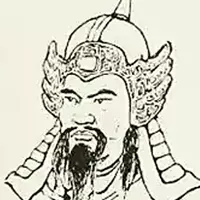
Zhang He (?-231), courtesy name Junyi, was a famous general of Wei during the Three Kingdoms period. Originally under Yuan Shao, he surrendered to Cao Cao after the Battle of Guandu. He achieved numerous military victories, with his greatest triumph being the defeat of Ma Su at Jieting, forcing Zhuge Liang to retreat. Zhang He was renowned for his adaptable tactics and skillful use of terrain, earning the respect and wariness of his adversary Zhuge Liang.
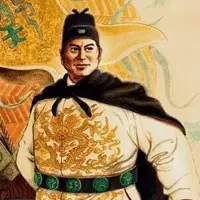
Zheng He (1371-1433) was a famous navigator and diplomat of the Ming dynasty. Between 1405 and 1433, he led seven massive naval expeditions to the 'Western Seas,' with fleets of over 200 ships and 27,000 crew members. His voyages reached more than 30 countries across Southeast Asia, South Asia, the Middle East, and East Africa -- predating Columbus by over half a century. These expeditions promoted economic and cultural exchange and demonstrated China's extraordinary maritime capabilities.
Jungian Cognitive Functions
ISTP's function order is Ti → Se → Ni → Fe: Dominant Function Ti, Auxiliary Function Se, Tertiary Function Ni, Inferior Function Fe; the shadow functions are Te, Si, Ne, Fi.
Jungian Functions · Positive
Introverted Thinking (Ti) occupies the dominant function position for ISTP.
The Dominant Function is the most core psychological trait of an individual, naturally developing from childhood and becoming the most proficient and trusted function in adulthood, being prioritized in most situations and greatly influencing one's cognitive style, decision-making approach, and behavioral patterns.
This function is the core of one's inner world, representing the most confident and proud part of oneself. It plays a decisive role in the individual's conscious orientation and source of strength, and is key to self-identity and potential realization.
The advantage of the Dominant Function lies in its naturalness and efficiency, as it is the function the individual is most accustomed to and can use with the least effort, providing strong internal motivation and clear decision-making direction. It helps the individual maintain confidence and decisiveness when facing challenges, and is an important source of achievement and energy recovery. However, the Dominant Function also has potential drawbacks. Due to its power and naturalness, the individual may become overly dependent on this function, neglecting the development and use of other psychological functions. This over-reliance can sometimes lead to incompetence or maladjustment when facing problems that require other functions. Additionally, overuse of the Dominant Function may make the individual stubborn and narrow-minded, unable to accept and understand perspectives and methods inconsistent with their dominant function.
The individual tends to understand the world through internal logic and analysis, enjoys independent thinking, and pursues consistency of concepts and theories. Strengths include a high degree of introspection, deep insight into complex problems, and innovative thinking in problem-solving. They can usually identify potential logical flaws, have keen observational skills for details, and can independently construct their own theoretical systems. Weaknesses may include indecisiveness due to over-analysis, appearing somewhat detached or inflexible in social interactions, and being insufficiently direct or open in emotional expression. Additionally, when Ti is under stress, the individual may become opinionated and resistant to others' viewpoints or feedback.
Extraverted Sensing (Se) occupies the auxiliary function position for ISTP.
The Auxiliary Function is the supporting function that assists the Dominant Function, working in coordination with it. When the Dominant Function is extraverted, the Auxiliary Function is introverted, and vice versa. The Auxiliary Function operates when the individual interacts with the outside world, helping them adapt and communicate in social environments. Unlike the Dominant Function, it is not innate but usually requires corresponding social environments to activate, giving it the strongest social attributes.
The development of the Auxiliary Function contributes to the individual's sense of responsibility and reliability in society, being the part that others consider most reliable. When the Auxiliary Function is well-developed, it helps the individual develop a positive self-identity regarding their own responsibility and reliability. Among the conscious functions, the Auxiliary Function, together with the Dominant Function, are the most commonly used and most visible functions, working together to help the individual gather and organize information, with the Dominant Function taking the lead and the Auxiliary Function providing support.
The individual exhibits high sensitivity to the surrounding environment and keen observational skills for details, tending to acquire information through direct experience, and being able to quickly adapt to environmental changes. These individuals are usually decisive in action, enjoy pursuing stimulation and adventure, are good at using their senses to explore the world, and can react quickly. In social situations, they may demonstrate strong social skills, being able to easily connect and interact with others. They may also show strong interest in new experiences and opportunities, willing to try different activities and experiences. Additionally, they may have a certain pursuit of the material world and sensory enjoyment, appreciating the fine things in life. However, over-reliance on Se may lead to easy distraction or excessive focus on short-term gratification, neglecting long-term planning and inner reflection.
Introverted Intuition (Ni) occupies the tertiary function position for ISTP.
The Tertiary Function represents a pure and unstable part of the individual, carrying a carefree quality. The Tertiary Function is like a willful teenager who never grows up, capable of displaying creativity and vitality, bringing life and joy to adult existence. However, it is emotionally very sensitive and fragile, usually not relied upon for serious or important matters, as its unstable nature may cause the individual to deviate from the norm.
In the process of personality development, the Tertiary Function may emerge in stress-free situations, adding joy to life, but when encountering challenges or pressure, it may not be seen as a reliable problem-solving tool. Its development and expression are related to the individual's personality type and the roles of other functions. The Tertiary Function is usually called upon when the Auxiliary Function cannot adequately handle a task. In daily life, it may not be the most prominent or frequently used function, but in specific situations, it can provide unique perspectives and problem-solving methods. As individuals deepen their understanding of their psychological type and increase self-awareness, the Tertiary Function can be better recognized and applied, promoting comprehensive personal development.
The individual may show strong interest in deep meanings and future possibilities, but these intuitions may lack practical application and reality testing, causing their ideas to sometimes appear overly idealistic or impractical. The Tertiary Function Ni may also challenge tradition and convention, seeking innovation and change, but this challenge may lack systematicity and coherence, as the Tertiary Function is not as powerful or influential as the Dominant Function. Additionally, since Ni is the Tertiary Function, it may more easily manifest under pressure, appearing as excessive anxiety about the unknown or distrust of reality, sometimes leading the individual to overlook real-world limitations and others' feedback in pursuit of ideals.
Extraverted Feeling (Fe) occupies the inferior function position for ISTP.
The Inferior Function is not prominent in the individual's consciousness, often undeveloped and unrecognized before middle age, causing it to manifest in a chaotic and destructive way in early life, inducing fear and anxiety. It represents certain unmet needs or unrecognized potentials deep within the individual, which conflict with the Dominant Function's values and are therefore ignored or suppressed. However, over time, the individual begins to recognize the importance of the Inferior Function and learns how to utilize and develop it, making it a key part of promoting personal growth and achieving life balance.
In the individual's psychological development, the Inferior Function may be triggered when encountering stress, threats, or challenges, at which point it may manifest in a negative or defensive way. The individual's attitude toward the Inferior Function is complex -- they may reject and devalue it, but may also begin to appreciate and utilize its unique value after self-exploration and growth. Developing the Inferior Function helps the individual recognize their full complexity, including previously ignored or suppressed parts. By actively accepting and cultivating the Inferior Function, the individual can more fully understand themselves, more effectively cope with life's various challenges, and achieve higher levels of self-actualization and psychological health.
The individual may encounter some challenges in handling emotional interactions and social expectations with others. They may not be adept at identifying and expressing their own emotions, and may find it difficult to understand and respond to others' emotional needs. In social situations, they may appear somewhat distant or cold, not out of intent, but because their natural tendency in emotional expression is relatively reserved. Additionally, they may feel uncomfortable in teamwork, as they may be more inclined toward independent thinking and action rather than relying on group consensus. However, this does not mean they don't care about others or lack empathy; they may simply need extra effort and self-awareness to develop this skill. Under stressful or tense situations, the Inferior Function Fe may become more prominent, making emotional management more challenging. Nevertheless, through self-development and awareness, the individual can gradually learn to better utilize this function for more harmonious communication and interaction with others.
Jungian Functions · Shadow
Extraverted Thinking (Te) occupies the opposing personality position for ISTP.
The Opposing Personality stands in opposition to the Dominant Function, posing a potential threat to it. The Opposing Personality typically does not appear proactively, but may be triggered under specific circumstances, such as challenges or pressure. Because the Opposing Personality is inherently opposed to the Dominant Function in nature, it may bring a sense of discomfort when operating, even if it is necessary and correct in certain situations. When the individual's Dominant Function is fully developed and utilized, the Opposing Personality, as its counterpart, often remains suppressed. However, when the individual encounters problems or situations that the Dominant Function cannot solve, the Opposing Personality may be activated as a supplementary or emergency mechanism.
Although the Opposing Personality may initially manifest as passive-aggressive or self-defensive attitudes, if properly recognized and utilized, it can enrich the individual's psychological perspective and provide new problem-solving angles. In practical application, understanding the existence and role of the Opposing Personality is significant for self-awareness and growth. It can help individuals identify and process internal self-conflicts, while also promoting understanding and acceptance of different viewpoints and methods. Through recognizing and integrating the Opposing Personality, individuals can more comprehensively develop their psychological capabilities, improving adaptability and problem-solving ability.
The individual may find themselves overreacting in these situations or unable to effectively organize thoughts and external environment, while potentially envying those who can naturally use the Te function.
Introverted Sensing (Si) occupies the critical parent position for ISTP.
The Critical Parent function plays the role of a critic in the individual's psychological structure, appearing with an arrogant, cold, and forceful attitude, finding and suppressing the opponent's weaknesses to maintain inner harmony. Although it can also demonstrate a strong sense of power when passively operating, its essence is outwardly strong but inwardly weak, more like an emergency mechanism compared to the natural and mature Dominant Function. The Critical Parent function has a strong presence and is sometimes mistaken for the Dominant Function, especially when the individual faces pressure and it becomes a prominent psychological response.
Although this function's use may help the individual gain advantages in debate, it may also bring bias and unfair evaluation of other viewpoints. The formation of the Critical Parent function is closely related to the individual's psychological development, gradually forming through the interaction between consciousness and the unconscious. When the individual's Dominant and Auxiliary Functions cannot effectively cope with external environments or internal conflicts, the Critical Parent function is activated as a supplementary mechanism. Its existence reveals perspectives and abilities the individual may overlook. Although it may not be the individual's most natural or mature function, in specific situations, it can provide necessary psychological support and protection. Through recognizing and understanding the Critical Parent function's role, individuals can better manage their psychological responses and promote personal growth and development.
The individual may feel extreme unease about their sensory experience or past decisions, tending to review the past with critical eyes, which may lead to excessive caution or fear about the future based on past experiences. Si in this position may also show suspicion of new experiences, especially when they conflict with deeply ingrained habits or memories.
Extraverted Intuition (Ne) occupies the trickster function position for ISTP.
The Trickster Function is the shadow of the "Eternal Child." When the Tertiary Function encounters setbacks and feels disappointed but unwilling to admit helplessness, the Trickster Function is awakened. Since the Tertiary Function itself is unstable, the third and seventh functions usually appear in pairs, and the Trickster Function is the most uncontrollable of all eight functions. It transforms our disappointment into anger toward the outside world, accompanied by loss of control and antisocial tendencies. Like a mischievous child, it uses tantrums, disruption, trickery, deception, and manipulation to rationalize frustration, protecting one's "inner child." It can also create illusions or lead to wrong decisions. Like a trickster, it relieves inner pressure through self-deprecation and self-ridicule, operating in a comical and awkward manner.
The individual may occasionally come up with unconventional, even absurd ideas, but these ideas are typically unorganized and may confuse or be misunderstood by others. Ne in this position may appear in humorous, sarcastic, or unexpected ways, reflecting a brief escape from conventional thinking patterns.
Introverted Feeling (Fi) occupies the demon function position for ISTP.
The Demon Function belongs to the realm of the unconscious in personality. We typically don't know how to use it intentionally; instead, it erupts suddenly without awareness. It can deliver the most valuable insights, but since we tend to unconsciously devalue and undermine it -- because the perspective it represents is the one we most lack -- we find it very difficult to directly utilize it. The Demon Function is typically undeveloped before middle age, appearing in youth as a disruptive form that induces fear and other negative emotions.
Only as age increases and the individual learns to coordinate and trust this function can it gradually develop and become a bridge connecting to the unconscious, helping balance the individual's life and ideals. In some cases, if the individual experiences severe psychological trauma or is in a rapid development period of the Tertiary Function, the Demon Function's usage frequency may become abnormally elevated. The Demon Function may disturb self-judgment, plunging the individual into chaos, reducing openness, leading to withdrawal and confusion. Nevertheless, if the individual can develop and integrate the Demon Function, it has the potential to transform into a positive force, bringing profound insight and growth.
The individual may completely deny personal emotional needs and values, exhibiting emotional behaviors under extreme stress that are drastically different from their usual personality, which may be destructive and difficult to control or understand.